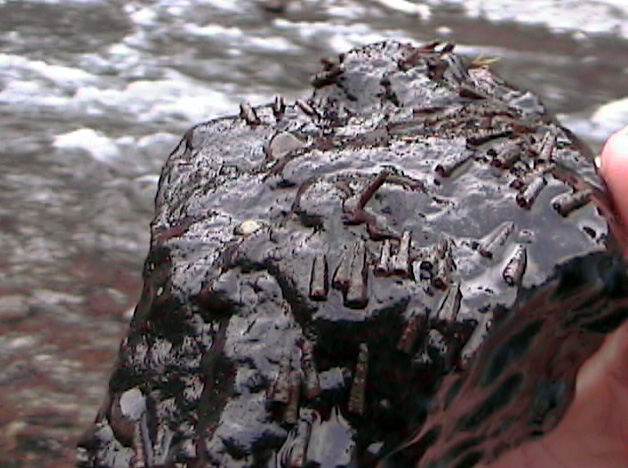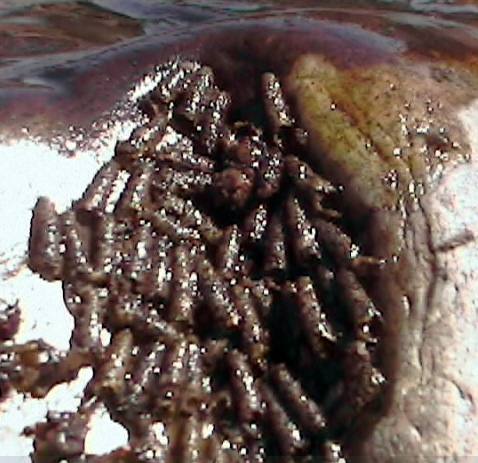
all the streams of Yellowstone.
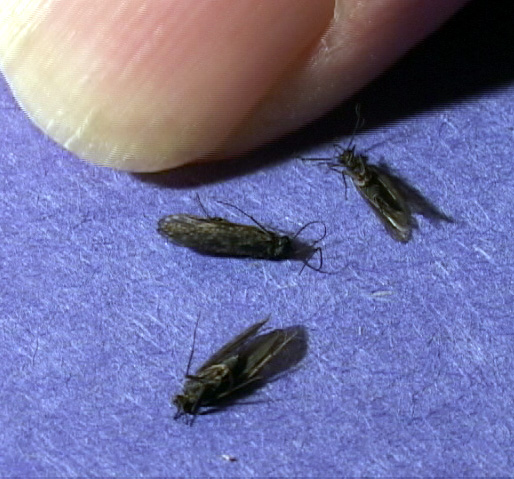
Caddis Adults are not the most
important stage of this insect –
the pupae are. It is much more
productive to fish an imitation of
the pupa than the adult of this
species.
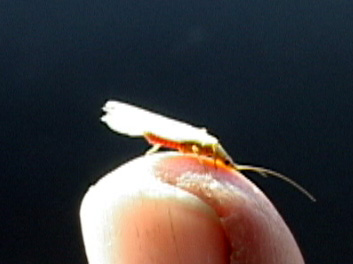
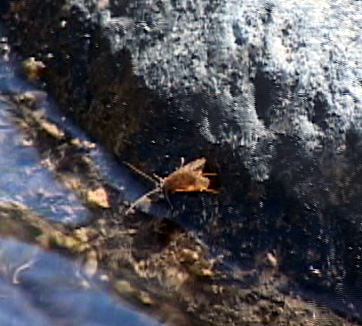
caddisflies that exist on streams
in Yellowstone that are not very
plentiful. This little tan colored
adult is one of a few we have
found that we are not certain of
as to species.
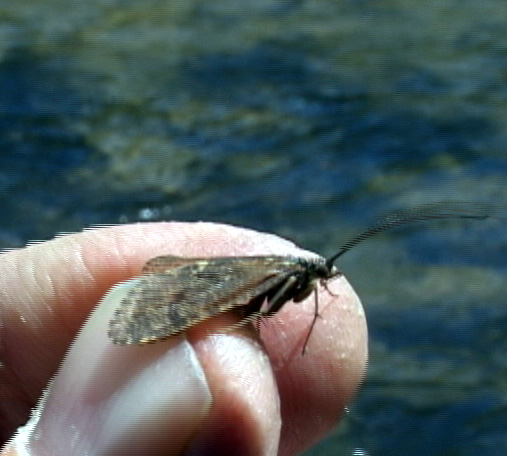
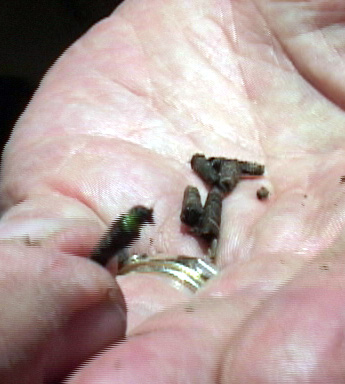
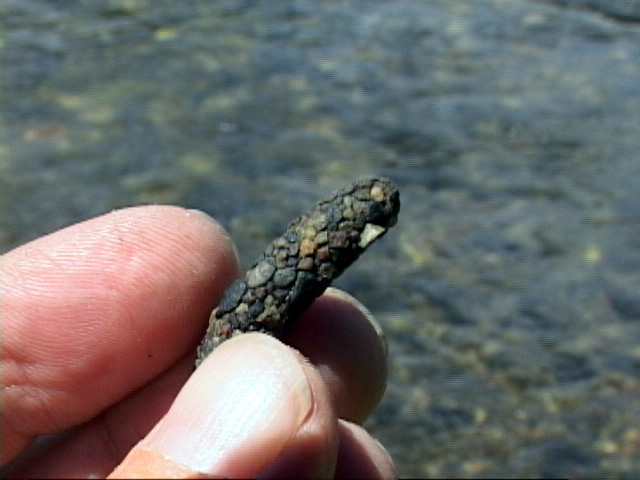
small as you can see from this
one in my hand. Trout will take
them in a three stages of life
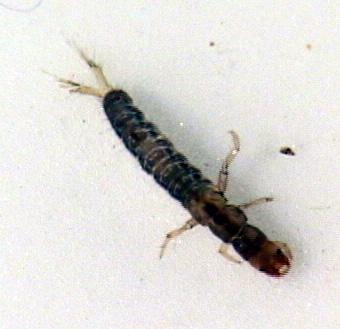
plates behind their heads. They
feed from a silk thread strung out
from their little houses.
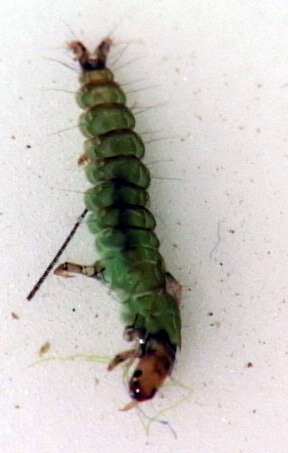
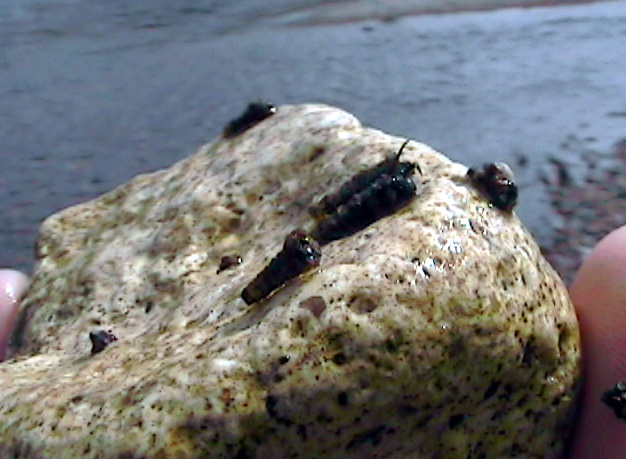
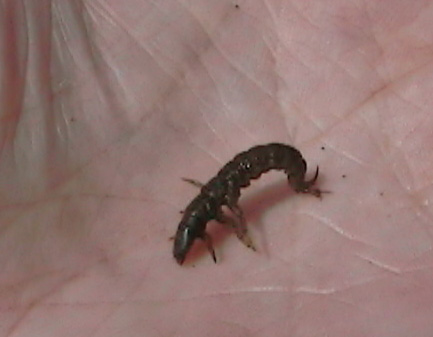
of the Rhyacophila family. These
are free-living caddis. The adults
of these are called Green Sedges
and are not as important as the
larva or pupa stage.
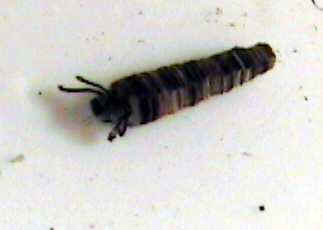
You can easily tell these from the
net-spinners. They only have one
dark plate behind their heads.
The net-spinners all have three.

Caddisflies, especially the net-spinning species are very plentiful in present. There are many different genera with numerous species that can be found in the park. It is important to be able to recognize which ones are fairly prevalent and which ones are usually not.
Click for Caddisfly Imitations (Flies)
Most anglers do not recognize a caddisfly hatch until it is too late to do them any good. They wait until they spot the adults flying around the banks or on the stream side vegetation before they make any effort to imitate them. At that point in time they may never even touch the water. After they have hatched the only time they are going to be important to the angler is when the females deposit their eggs. This may be a day or several days away. This may occur at night and often does. They can attempt to deposit their eggs several times, repeating the action.
They deposit their eggs sometimes from the air and don’t touch the water. Some species crawl into the water from the banks and rocks to deposit their eggs on the bottom. Many of them dive and paste them on the bottom. Others drop them by touching the water.
Some of them swim to the surface and hatch similar to a mayfly. Others emerge on the bottom and swim to the surface to fly away. Still many of them crawl out of the water on the bottom and up on rocks, sticks or the bank to hatch. Some of them even swim to the surface, hatch and run to the banks on the surface of the water. Unless you know which way the particular species of caddisfly emerges and how it goes about depositing its eggs, you are guessing at trying to imitate its behavior. Tying on an elk hair caddis and fishing it dead drift works in about 10% of the cases where adult caddisflies are observed and doesn’t work in about 90% of the cases.
Little Black Caddis:
One of the most important hatches in the park is the Little Black Caddis usually called the “Mothers Day Hatch” in many other places. These are Brachycentridae family occidentalis species of the Brachycentrus genus. During the winter or early spring you can observe the chimney cases attached to rocks in the stream in most of the streams.
These caddisflies hatch when the water is 48 to 52 degrees F., during the afternoon in a manner similar to mayflies. This hatch can last up to a month or more depending on weather stability. Some streams eliminate this hatch from anglers with the runoff which occurs at the same time.
The pupae swim to the surface and hatch into adults. The adult caddis ride the water a short time and fly away. They deposit their eggs by touching the water with their abdomens, so catching trout during the ovipositing period is very productive. This usually occurs from mid-afternoon until dark.
These caddisflies are a hook size 16 or 18, depending on their sex, in all 3 stages of life. Another species of this genus, the americanus, emerges much later in the year. This hatch occurs in the later part of summer. The emerging and egg laying activity is very similar to the first hatch.
Green Sedge:
The Green Sedge, sometimes called the Green Rock Worm because of its larva stage, can occasionally be found in some of the park’s streams. The Green Sedges or Rhyacophila species also usually hatch in sparse numbers. The Green Sedge rock worm or larvae are free living larvae that are readily taken by trout. They do not build cases except the short period of time when they change to the pupae stage. They are available throughout the year.
There are several species of them in the park. They range in hook size from 14 to 18. You will find them in the fast water and riffles. The larva stage is by far the most important stage to imitate. The adult stage of this mayfly is rarely found in numbers large enough to justify imitating. It is best to imitate the larvae stage of the Green Sedge.
Little Black (Short-Horned Sedges) Caddis:
Little Black Caddis, also called Short-Horned Sedge, are fairly plentiful in some of the streams. These are saddle cased larvae. You will find the Glossosoma montana species to be the most important and plentiful. They are about a hook size 20 to 22. The emergers are the most important stage because they emerge mid-stream and stay on the water until they get to the banks. They dive to deposit their eggs. You would imitate this with a wet fly imitation.
Tiny Black Caddis:
Micrasema bactro, called Tiny Black Caddis, are occasionally found in some of the park’s streams. These are a hook size 20. These crawl out of the water usually on rocks to hatch during the day and deposit their eggs in the afternoons. They hatch when the water is about 45-50 degrees.
Spotted Sedges:
You will find that the net-spinning caddisflies are by far the most important of the caddisflies in Yellowstone. These are mostly Hydropsyche species called Spotted Sedges.
The pupa stage is the best stage of life to imitate. The egg ovipositing can also create some action from the trout. This happen just before and after dark. These are a hook size 16 to 18.
Little Sister Caddis (Little Olive Sedge):
Cheumatopsyche species or Little Sister Sedges also hatch in some of Yellowstone’s streams. These are also net-spinning caddisflies. It is best to imitate the pupae stage of this caddisfly. The egg layers can be imitated effectively just before dark. These are a hook size 20-22.
Great Gray Spotted Sedge::
The Arctopsyche grandis, called the Great Gray Spotted Sedge, are present in some of the park’s streams. This is a large caddisfly, usually a hook size 10. The problem with them for anglers is that they both emerge and deposit their eggs during the night.
Long Horn Sedges:
The Oecetis genus of long horn caddisflies have species that are prevalent on some streams in Yellowstone. There is both a spring and a fall emergence of these caddisflies. We have seen these long horn caddisflies on the Madison, Firehole, all the stream feeding into Yellowstone Lake and the upper Yellowstone River. These are a hook size 16.
White Miller:
The Nectopsyche species, or White Miller, emerges on some rivers, especially the Firehole and Madison. It has two emergences, one in the spring and another in the late summer and early fall. This hatch last a long time and is very prolific. The trout eat the emergers and the egg layers. Hook size 16.
Speckled Peter:
The Helicopsyche borealis is a small caddisfly, about a hook size 20, found for the most part in the Madison and Firehole Rivers.
Little Brown Caddis:
The Lepidostoma pluviale or Little Brown Caddisfly hatches for about a month on some of the streams in the park. This caddisfly emerges in the evenings. They are a hook size 18.
Great Silver Stripped Sedge:
There are some Hesperophylax species, mainly designatus, that exist on certain streams in the park. We have seen these during the month of August on Pelican Creek and the Yellowstone River. They are a very large caddisfly, about a hook size 8.
Others:
There are several other species of caddisflies found in the park but none of them that we have encountered hatch in large quantities. If you have larva, pupa and adult imitations of the above caddisfly species we feel sure you will have something close enough to imitate any of the other species you may encounter.
Click for Caddisfly Imitations (Flies)
Copyright 2012 James Marsh
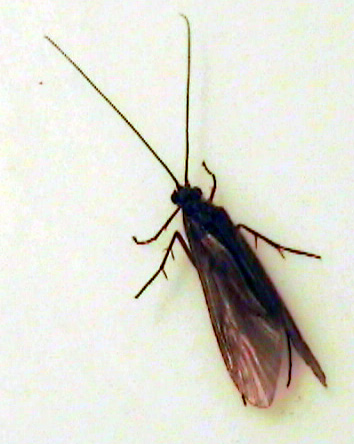
identify even down to the genus level.
You get a much better opportunity of
identifying them in their larvae stage of life.