The most often asked question in fly-fishing is “what fly do I use“?
Trout in Yellowstone or anywhere in the World for that matter, do not feed on feathers, hair and metal hooks. They feed on insects, crustaceans, fish and other food that is available in the streams.
Options For Selecting Flies:
- Email us at sales@perfectflystore.com with the dates you will be fishing Yellowstone Country and we will send you a list of our fly suggestions. Please allow up to 24 hours for a response.
- Call us at 800-594-4726 and we will help you decide which flies you need.
- Call or email us with a budget for flies and we will select them and get them to you in time for your trip.
Shipping is free in the U. S. for all orders. Orders over $50 are shipped Priority Mail.
Types of Flies
Mayflies
Caddisflies
Stoneflies
Midges
Streamers
Terrestrials
Hatch Charts
Yellowstone Trout Flies
If you plan on fly fishing for trout in Yellowstone National Park you better get used to the term “Yellowstone trout flies”. Although the name infers there’s something unique to the Yellowstone area about the flies you need to fish the streams, there certainly isn’t. The purpose of the fly is to fool the trout into taking it for one of the insects or other items of food the trout are eating at the time. If the fly does a good job of that, there won’t be anything unique to Yellowstone about it. The insects and other trout foods that exist in the streams of Yellowstone National Park and for that matter, the streams in the general area outside the park, are the same insects and other items of food that are found in the streams of most other Northern Rocky Mountain states. In fact, several species of aquatic and terrestrial insects found in Yellowstone exist in trout streams throughout the nation. The same thing is true of most of the baitfish, minnows, sculpin, and crustaceans that are in the streams of the park.
Since the various foods the trout eat aren’t unique to the streams of Yellowstone, neither are the flies you need to catch the trout. The only thing that should be unique about the flies is they should imitate the specific insects and other foods the trout eat in the streams of Yellowstone. The more your fly resembles the appearance and behavior of the most plentiful and available food the trout are eating at the time you are fishing, the easier it will be for you to fool the trout into taking your fly for the real thing.
You’ll probably read and heard that the presentation of the fly is far more important than the fly itself. It’s a talking point some anglers frequently use as a cover up for their lack of knowledge about aquatic insects. To say the presentation of a fly is more important than the fly itself is like saying the engines of an airplane are more important than its wings.
The trout in Yellowstone National Park are either wild, stream-bred trout, or native trout. They are not stocked trout that were raised in a hatchery on fish food pellets. One reason they survive as well as they do is they are extremely skillful at avoiding predators. The trout are as nervous as a long tail cat in a nursing home room full of rocking chairs. They survive their entire life by eating the food that’s in the streams they live in but only when their pea size brains signal they are safe from being eaten by one of their own predators.
If you want to be successful in catching them, you better make certain your fly is the only thing they see. If they see you, your shiny fly reel, or even the shadow of your fly rod waving through the air, you can forget about catching them. Just the sight or sound of your fly line hitting the water is enough to send them fleeing for the nearest cover.
Since the fly represents what the trout are trying to eat and since it’s the only thing the trout should be able to see to avoid spooking them before they are hooked, don’t you think it’s rather important? Furthermore, doesn’t it makes sense the fly should resemble the same thing the trout are eating?
Get used to hearing that most of the trout in Yellowstone feed opportunistically, a tongue twisting statement often used by bug challenged anglers to lessen the importance of the fly. It is a true statement because it can be said that trout feed opportunistically everywhere they exist. In a technical sense, all fish are opportunistic feeders. That simply means if it’s available, they may eat more than one single item of food. This particular one word oversimplification of how trout feed can create big problems for those that misunderstand it. The fact trout feed opportunistically is often misinterpreted to mean the trout will eat whatever happens to come along and that the particular fly you use isn’t important.
Selective feeding is another little understood fly fishing term that’s often interpreted to mean just the opposite of opportunistic feeding. A trout is said to be feeding selectively when it’s preferring one insect over another. In a pure technical sense, if a trout ate a hundred Little Yellow stonefly nymphs and just one Green Drake mayfly nymph, it could be said the trout was feeding opportunistically. From the same technical standpoint, the trout would not be feeding entirely selectively because it ate more than one insect. If selective feeding is used in a more meaningful sense it would imply that even though trout may not focus entirely on one insect, the great majority of what they eat is always the one that’s most plentiful and easiest for them to acquire.
If a trout is feeding near or on the surface in a certain area, feeding lane or zone of water, and both a Yellow Quill dun and a Blue-winged Olive dun happened to be drift downstream, side-by-side within that zone, the trout may very well eat either one of the insects. If it could react quickly enough it may even eat both of them. It may not feed selectively in the sense it would choose one insect over the other. The problem with this hypothetical scenario is that it’s unrealistic. Such a scenario rarely exist in the streams of Yellowstone. For example, during the times trout are lined up in a particular lane, line or zone of water feeding on the surface on Yellow Quills hatching in a fast water riffle or run, they are there because of a concentration of that food. The food in that same type of water almost always consists of one and only one insect. Although it’s possible, it’s rare that two or more different aquatic insects are hatching at exactly the same time in the same type of water and are getting caught up in the same current seams together.
Yellow Quills are clinger nymphs that prefer fast water and Blue-winged Olives are swimming nymphs that prefer slow to moderate flows. They neither live nor hatch in the same areas of the streams. They rarely get caught in the same currents and almost never at the same time.
About a third of the aquatic insects, including some mayflies, several caddisflies and all stoneflies, don’t even hatch in the water. They crawl out on the banks to hatch. Trout focus on eating them when they crawl out of their normal hiding spots beneath the rocks to the banks. Those hatching insects that do get caught in the fast water current seams are almost always clinger mayflies. Although they move from their normal fast water habitat to the nearest slower flowing water to emerge, many get caught in the seams between the slow and fast water and channeled downstream in the fast water.
This feeding zone, area or lane I’m referring to, whether it is in fast, moderate or slow areas of water, also relates to depth. It includes the surface and the column of water from the surface to the bottom as well as the bottom itself. Although you may envision various nymphs, larvae and other food drifting downstream at random, whether accidentally or in a behavioral drift, such a situation very rarely exist. Aquatic insect nymphs and larvae don’t survive drifting freely downstream. If you sit on the bank of a stream in Yellowstone, staring into the water looking for insect larvae and nymphs drifting freely downstream, get ready to fall asleep before you spot the first one.
Except during a hatch, there’s almost never enough free drifting nymphs, larvae, terrestrial insects ,or any other form of food in the fast water at any one time to warrant trout holding in the faster currents to feed. When trout are feeding in certain areas, zones or lanes, they are almost always feeding on one particular insect that’s hatching in quantities sufficient enough to warrant the trout being there holding in the fast water feeding on them. Anytime there’s lots of food drifting downstream in fast water current, you can bet you last dollar there’s a hatch underway. Trout won’t hold in fast current waiting on random bits of food to drift downstream. If they did, they will expend more energy than they could replenish.
The exact location of whatever is most available and most plentiful for the trout to eat in a stream at any given time varies greatly. The different aquatic insects live, feed, hatch, mate and fall dead in different sections and depths of the streams depending on the particular species of aquatic insect.
Even if the trout aren’t being one-hundred percent selective as to the particular food they are eating, they are certainly being selective as to exactly where in the stream they are looking for food. Selective feeding is nature’s way of letting the trout feed efficiently. This allows them to use less energy and take in more food. The trout are feeding in similar areas of the stream, focusing on eating what’s most plentiful and available for them to eat using a minimum amount of effort. It’s necessary for their survival. If trout expend more energy than the food they take in can replenish, they will soon die.
Trout will only get into a certain fast water feeding zone, line or lane and hold there only when there’s a substantial amount of food coming their way. As long as there’s an adequate amount of food coming down the same feeding lane, the trout won’t move to another area of water, or seek another depth to feed. Again, in such cases, it’s almost always one and only one insect.
Why do certain generic flies that mimic several insects of the same size and general shade of color sometimes work quite well in the fast water and why do attractor flies that don’t necessarily match anything often work in the fast water? For example, trout will sometimes take a gray body Parachute Adams dry fly when Pale Morning Duns are hatching. The answer lies in timing. First of all, a trout has only a fraction of a second to examine a fly in fast water. Secondly, the trout has only a small window of vision when it is feeding near the surface. The trout is only able to see a distorted image of part of the fly that’s above the surface and only for a split second. Even then you will often see flashes where trout detect something that’s unnatural and rejected the fly at the last split second.
Even when an insect is hatching and becoming caught up in the fast water runs and riffles and trout are feeding on them, which had you rather have tied on – a fly that imitated the hatching insect, or one that imitated something that wasn’t even present? Or had you rather have a generic fly that imitates a little of everything as opposed to a fly that’s imitating the insect that’s hatching. Even in fast water situations such as I just described, you will find better, more realistic imitations of the naturals results in a higher percentage of hookups.
What about those other two-thirds of the insects that either emerge or crawl out of the water to hatch from the slow to moderate sections of the pocket water streams? In those cases the trout are able to get a very good look at your fly. In those situations I think you will find that an imitation that closely resembles the appearance and behavior of the natural will greatly increase your odds of success.
Please don’t refer to this solely as “matching the hatch”. It involves much more than that. It’s also matching the 99.9 percent of the aquatic life in the streams that hasn‘t yet hatched. It should also mean “matching the egg layers”. It should even include “matching the dead”, or the mayfly spinners and other aquatic and terrestrial insects that fall into the streams and die. Don’t forget the other trout foods. Call that “matching the sculpin and minnows” if you like. Instead of improperly calling everything “matching the hatch“, just call it “matching the naturals“. Even better, just think of it as matching the food the trout eat with a fly that closely resembles that particular food‘s appearance and behavior.
Don’t think I’m attempting to undermine the importance of presentation, or that I’m even contending that the fly is more important than the way it’s presented. That’s not my intension at all but do keep this in mind. The first and foremost important key to presentation is knowing “where” in the streams the insects live and hatch. Remember, although the trout may not be feeding selectively, eating one and only one insect, they are always selective in exactly where they feed. They feed where the insects are most plentiful and easiest to acquire and that often isn’t in the fast water where the trout are easier to fool.
If your not satisfied with mediocre success, or you do okay and you want to improve to the point you will be able to consistently catch trout from the streams Yellowstone Country, I suggest you start by learning all you can about the food they eat to survive on. If you have been fishing using the traditional generic and attractor flies like the Royal Wulffs, Parachute Adams, Hares Ear nymphs and other generic and attractor flies, and your not achieving the success that you desire, you may want to consider switching to more realistic imitations of the insects and other foods the trout eat.
– James Marsh
Copyright 2013 All Rights Reserved
Matching the Behavior of the Insect:
More importantly, you should match the behavior of that particular insect or other trout food. Your fly must not only look like the natural, it must act like the natural. This gets down to the presentation of the fly. Presentation is almost always more important than how well the fly matches the natural.
In order for you to make the proper presentation of any insect at its various stages of life, it is necessary that you know how it behaves. This means where it lives in the nymphal stage of life; when it is available to the trout; how it emerges; when, where and how the adult stages of the insect are subject to being eaten by trout; when, where and how the females deposit their eggs; and when, where and how they die.
If caddisflies dive to deposit their eggs on the bottom, you need to know it and how to imitate that behavior. If mayflies emerge on the bottom of the stream rather than the surface, you need to know it and how to imitate it. These are examples of numerous activities that you should be familiar with if you are going to successfully imitate aquatic insects. If you don’t, you are relying on pure luck to catch trout rather than knowledge.
Perfect Flies:
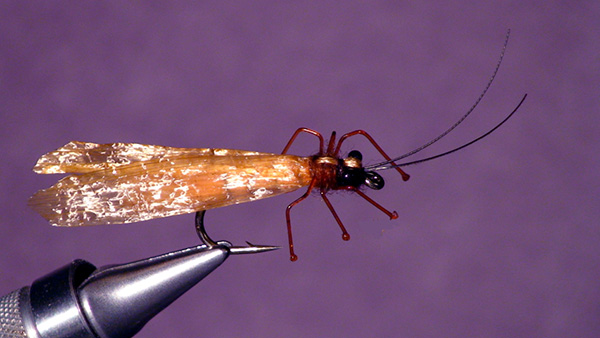
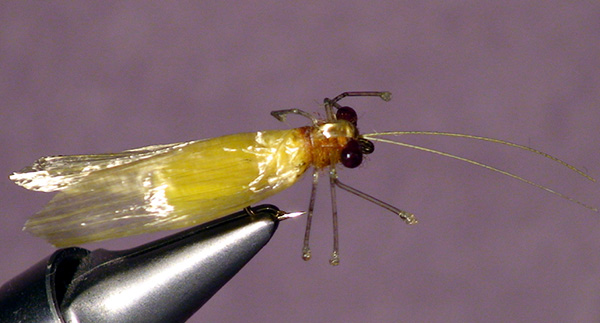
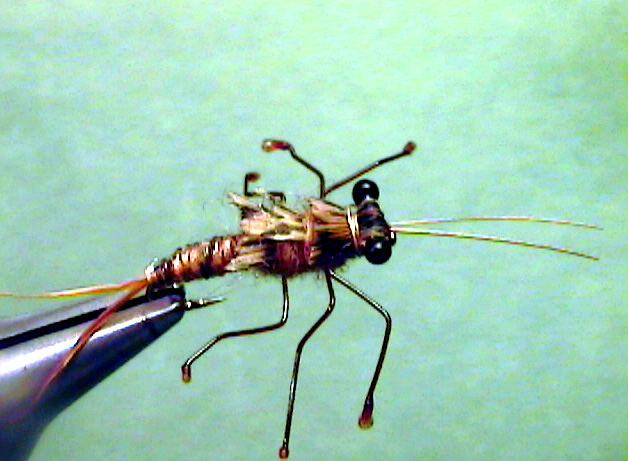
The “Perfect Flies” we are recommending, for those that tie flies, are our own patterns. By “perfect fly”, we simply mean one that catches fish. The name “Perfect Fly” is not meant to imply that they are perfect in reality. The patterns are usually, as most patterns are, modifications of other very successful patterns but in many cases, with colors and materials that more accurately imitate the natural.
Difficulty in Tying and Fishing:
The Perfect Fly patterns are not necessarily the easiest flies to tie and in some cases, they may not be as durable as other flies. Some patterns, especially those utilizing CDC feathers, are designed to be presented in smooth flowing water where the insects are most likely to be found and should not be presented in rough, turbulent water. If you are having problems with the fly floating correctly or seeing it well, it may be that you are fishing it incorrectly or in the wrong types of water.