Yellowstone National Park
program that covers all the
details about fly fishing gear
and flies.
Click here for more information
is a DVD program that covers all
the knots you will need to tie for
any fly fishing situation.
Click here for more information
Here are some suggestions that may be of help in choosing gear.
Fly Line:
Most all of the fly-fishing you would be doing can be done using a floating fly line. A sinking or sinking tip line may be needed for specific or special fishing methods.
Line sizes would vary depending on the fly you choose to use. Small dry flies fished in the very small streams may suggest you use as small as a three weight line. Most anglers would use a four (4) or five (5) weight however. A five (5) weight fly line would probably be the best all around size for the park if you were limited to one line size. Six (6) and seven (7) weight lines would be preferred for nymphing because you need some added strength to cast the weight you may be attaching to the nymphs. A six (6) or seven (7) weight line sizes would generally be preferred for streamer fishing.
We recommend a weight-forward, floating fly line. We carry several sizes and will be glad to assist you in choosing the right line for your needs.
Backing:
Fly Line Backing is usually needed to fill your fly reel spool. There are many trout in the park that can easily take you line down into the backing, so it is certainly recommended.
Rods:
You should select the weight of the fly rod based on the size of the line you need to cast the flies you will be casting. Choose the fly rod size to match the line size.
You do not necessarily need a fast action rod for the Yellowstone National Park. Medium action rods make the type of cast you need in many situations much better than a fast or tip action rod. They also protect light tippets better than fast action rods.
Some anglers like to use very short rods for the very small trout streams. Some prefer a normal rod length because they help make the short roll cast better than a short rod. We recommend an eight (8) to nine (9) foot rod length for most dry fly situations. A nine (9) foot rod may also come in handy for high-stick nymph fishing.
We recommend our medium, fast action rods. Have four different models available. We have the Journeyman rod which is an excellent rod for the beginning fly angler and which is also available in a getting started set to outfit someone who is new to fly fishing. We also have three other excellent models depending on your budget which are the Pro, the Master and The Premier. All of these are high quality rods which will give you years of use and enjoyment. You will find the rods you need from this link.
Reels:
Most anglers will tell you that the fly reel is not an important item, that it only serves to store your line. It is true that you will probably hand- line most of the small fish you catch but again, most streams do contain some large trout. Hang one of them and you will certainly wish that you had something more than a rough clicker drag. For that reason we suggest using a reel with a good, smooth disc drag system. The other important consideration is the weight of the reel. The lighter it is the better you will like it. It should, of course, match the size of the line you are using.
We have two lines of reels that we recommend. The “SR” series and the “Journeyman’ series are both high quality reels that are available in several sizes to match your rod at a price that is hard to beat. We also offer reel and rod combos to fit your needs.
Leaders:
Short leaders from eight (8) to ten (10) feet work well in most cases. Remember that if you are making very short cast, and you often do in the small streams of Yellowstone, you would be mostly casting a leader, especially if the leader was a long one. Leaders don’t cast near as well as fly lines so you should keep the leader as short as possible in cases where you are making short cast. In the faster pocket water the short leaders don’t tend to be as much of a problem as they do in smooth water.
There are situations where you will need a long leader. Ten and twelve foot leaders may be needed when the water is extremely low and clear as well as smooth. There are many situation where the water is smooth. Most all of the meadow streams have smooth flowing water. The Firehole and Madison Rivers at times will require a longer leader. In these situations the trout are easily spooked.
Most of the time a 5X leader would probably be the preferred choice. However, again if the water is low, clear or smooth, or if you are fishing very small flies such as midges, you may need to use a 6X or 7X leader. In cases where you are fishing streamers or heavy nymphs you may need a 2X or 3 X leader, so be prepared by having a good selection of them. Factory tapered leaders work just fine but if you want to tie your own, please do.
Tippets:
Everything we just said about leader sizes applies to the tippet except you would need to keep them a size smaller than the tag end of the leader in most cases. Fluorocarbon tippets and leaders for that matter, work fine of course, and may offer some advantage over nylon in very clear or smooth water. That should be a matter of personal choice.
We carry nylon and monofilament tippet in sizes 3x to 6x. These are a high quality leader and are very important as this is where the fly is tied on and should match the overall size of the rigging on the rod and we will be happy to assist you in choosing the correct size for your needs.
Waders:
There are many situations where you may need to wade but our rule of thumb is not to wade unless you have to in order to properly present your fly. When you do use waders, we recommend waders that breathe. Those made of Gore-Tex material are preferred.
Wading Boots:
The park requires rubber bottom shoes as opposed to felt or other materials.
Wading Belt:
Don’t be caught wading without a wading belt on. Keep it snug and as tight as you can comfortable wear it. Usually it will not be needed but it is a very good idea to form a habit of always wearing it. If you ever fall in while wading, it will help keep the water from filling your waders and drowning you. It is almost impossible to get up off the bottom with your waders full of water, especially if your are washing downstream in a strong current.
Gravel Guards:
Gravel guards of some type are recommended to keep the small stones and other debris out of your boots. They can cause leaks.
Sunglasses:
Polarized sunglasses are a must. They will help you in many ways. Not only will they allow you to see the bottom more clearly, they may help you spot trout. We recommend plastic lens over glass for safety reasons. Large flies that accidentally hit the lens can break the glass (and maybe even the plastic) and cut your eye.
The best shade of color depends on the light conditions. Darker colors work better on bright sunshine days and lighter colors of lenses work better on cloudy, overcast days. We think the best all around color is amber.
Fly Vest:
A fly vest or chest pack is nice but not absolutely necessary. It will help store such things as your fly boxes, pliers, and other accessories.
Fly Boxes:
You will need at least one, of course, but separating your nymphs from your dry flies and terrestrials is always a good idea.
Floatants:
Some type of floatant to help your dry flies to float is necessary for most types of flies. There are powered and liquid types available. The rough pocket water can drown your flies fairly easy.
Clothing:
The shade of color of your clothing and hat or cap is very important. In the small streams you will usually be making short cast. That means you will need to get close to the trout without spooking them. Bright colors tend to spook them more than subdued or dull colored clothing. You should try to match the colors of the surroundings as much as possible. In other words you should camouflage yourself as much as you can. Dull greens and light browns are usually good colors to wear.
Tippet Dispenser (Extra Tippet Material):
Extra tippet material is necessary. Each time you tie on a fly you will shorten the tippet. If you hang up, and you may well do that, you may damage or shorten the tippet. Carry extra tippet in the size you need. We suggest 2X through 7X. A tippet dispenser will help you keep track of the tippet material and provides easy access. However, this isn’t a requirement.
Clippers:
You will need some way of clipping you leader and tippet. A knife or bitting the tippet will work of course, but it will blunt the ends of the tippet and make it difficult to get through the eyes of some hooks. Clippers will chop it off without a blunt end.
Landing Net:
We land most of our fish by hand. This is much more difficult than using a landing net. However, the landing net is not a easy thing to carry along. If not stored behind your back it gets in the way sometimes and tends to hang on everything. If you catch a large brown trout, for example, you will probably wish you had one though. If you do choose to use one, you will need a small to medium size net. The huge ones are not necessary. There are landing net clips you can purchase to hook them to your fly vest or pants.
Midge Threader:
If you fish midges, and we hope you do, you will need a midge threader even if you have good eye sight. If you don’t see well, you will have to have one or someone along with you to tie them on for you.
Fly Floatant:
Fly Floatants come in several varieties and types. There are liquid and dry powder types. They help your dry flies float better. Some types cause the fly to create air bubbles. Some anglers contend that this makes the fly look more natural to the trout because some insects use air to propel themselves to the surface when they hatch. We do suggest you carry some of the liquid paste type to help your dry flies float better in the rough pocket water typical of some Yellowstone streams.
Bear Spray:
If you are concerned about bears, carry a can of bear spray with you. It will lessen your worry and help you enjoy the trip better.
Insect Repellent:
A good insect repellent is often a necessity during the Summer months, depending on where you fish.
Copyright 2018 James Marsh
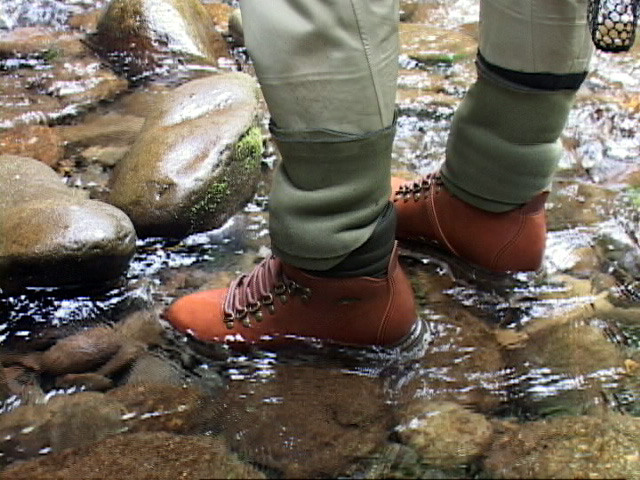
must to keep from slipping and
falling and to protect your feet from
the rough bottom. Gravel guards
keep the rocks out of your boots.
Small gravel getting in your boots
can cause leaks in your waders.
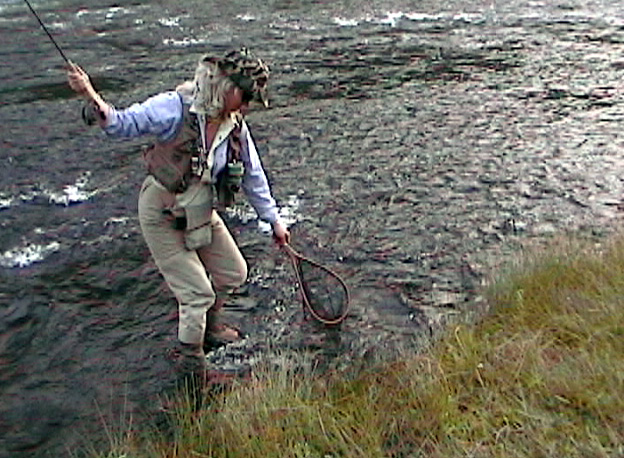
presence helps. Trout can spot
movement of objects above the
water. Angie would have been
better off it this light blue shirt was
green. Dress like a deer or turkey
hunter and you will probably catch
more trout.
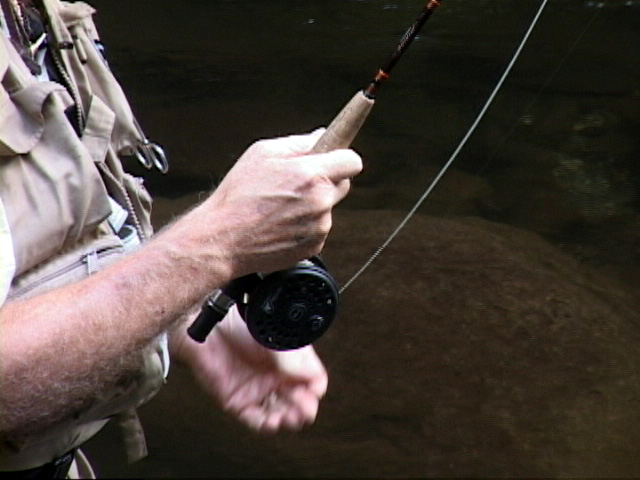
a necessity. You shouldn’t make
casting any more difficult than it
is by having an unbalanced outfit.
don’t have to be the most
expensive ones there are but they
should be of good quality. The
breathable types are the best.