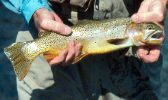
In our opinion, native Cutthroat
trout are the main attraction of
Yellowstone National Park.
They are the only native trout
found in the park.
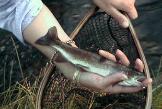
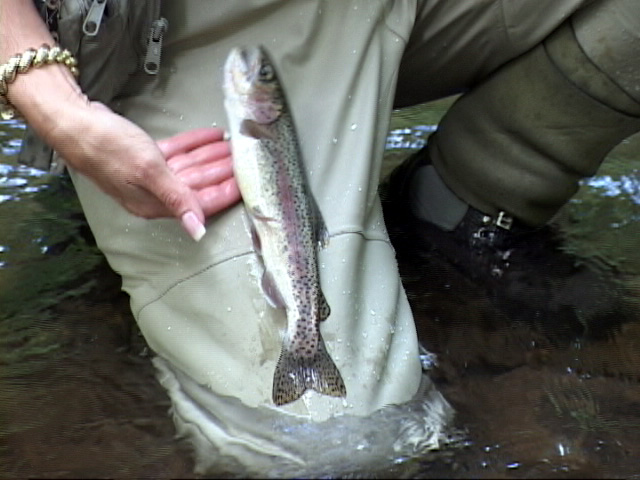
The rainbow trout is a common
trout in the park. They prefer the
cool, fast flowing water that is
found in almost all of the
park’s freestone streams.
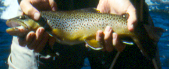
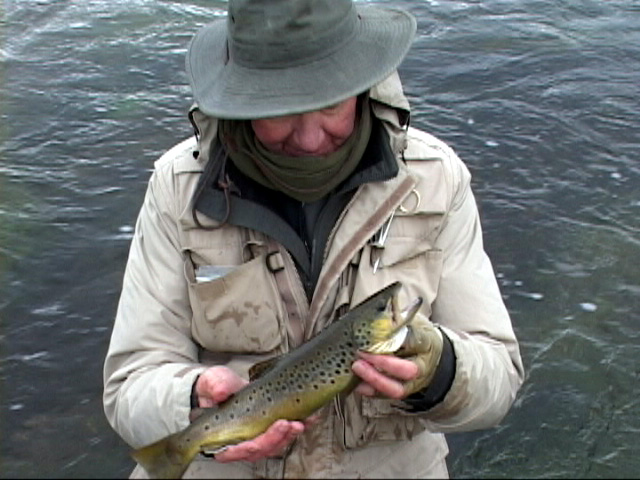
Brown trout can be found in
many of the park’s streams.
They are considered the most
difficult to catch trout of the
four species.
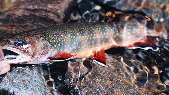
many of the park’s streams.
They are fun and easy to catch.
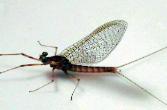
one of the many species that
exist in Yellowstone’s vast
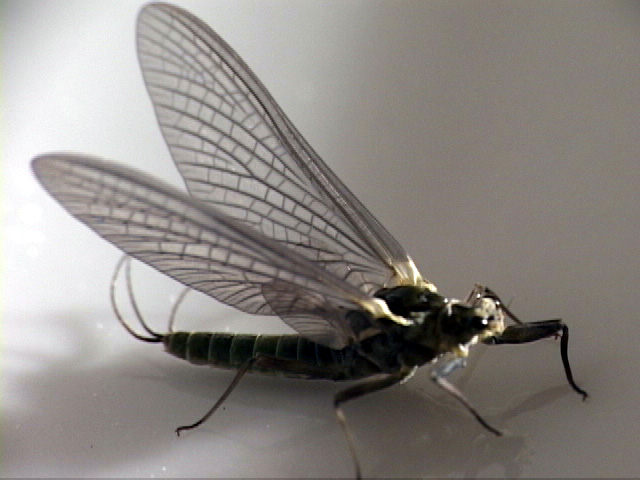
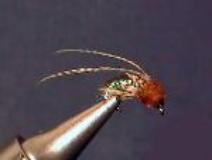
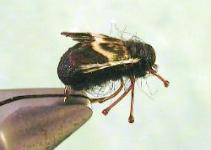
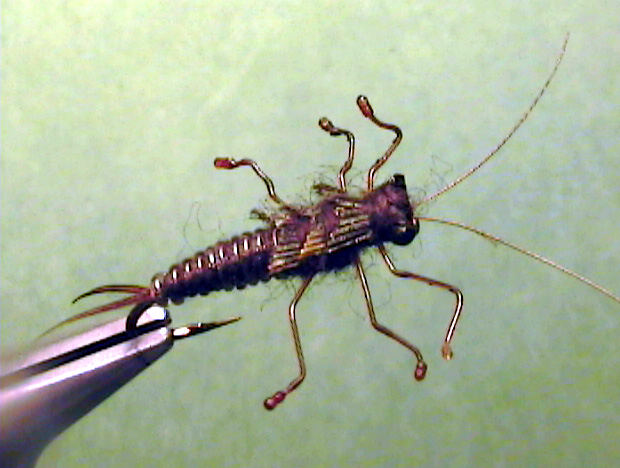
network of streams. Stoneflies,
caddisflies and other aquatic
insects are also present.
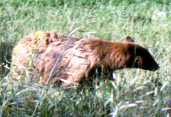
are found in the park. Anglers
should be aware of them but
not afraid to fish the streams.
Stream? There’s no such thing.
Each and every part of every
stream is different.. You never
see exactly the same thing twice.
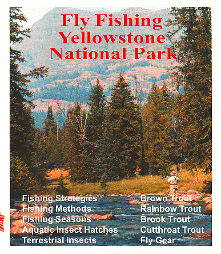
National Park:
This new DVD (2 Disc Set)
provides over 4 hours of
information and instructions on
fishing for trout in the park. $49.95
Click here for More Information
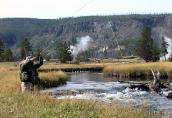
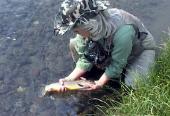
a trout on the line.
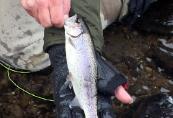
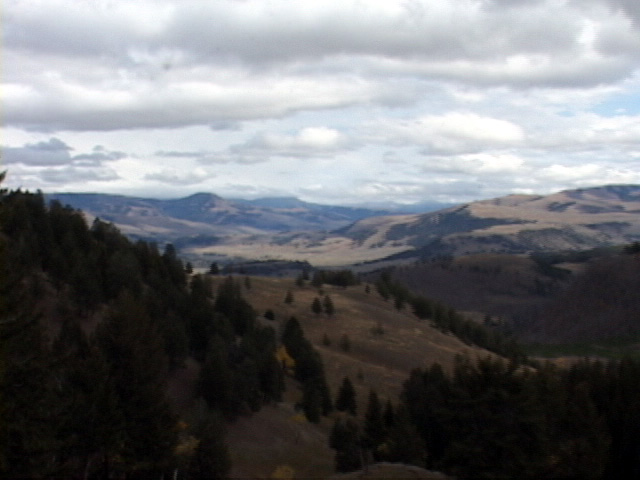
Yellowstone National Park
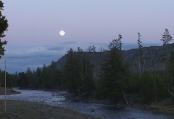
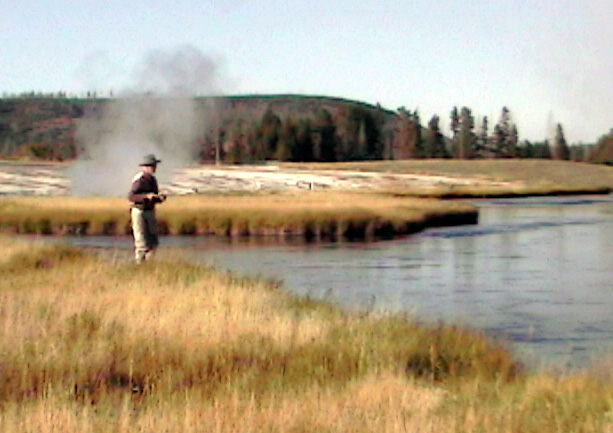
Madison River on a cold October
evening.
- 04/17/24 Fly Fishing Report for Yellowstone National Park – Knowing How These Variables Affect Your FishingLighting Conditions: Bright skies and/or cloudy Skies affect your fishing as much as anything. Low lighting conditions and bright lighting conditions affect the way trout can see your fly. In bright light conditions, trout, especially the brown trout, tend to stay deeper and/or under the cover of vegetation, undercut banks. Low light conditions exist either… Read More »04/17/24 Fly Fishing Report for Yellowstone National Park – Knowing How These Variables Affect Your Fishing
Send us an email (sales@perfectflystore.com) or
call us at 800 594 4726 and let us help you plan that next Yellowstone National Park Fly Fishing Trip!
Click below to see our new sister websites:
www.perfectflystore.com
www.flyfishingsmokymountains.com
Fly Fishing Yellowstone National Park
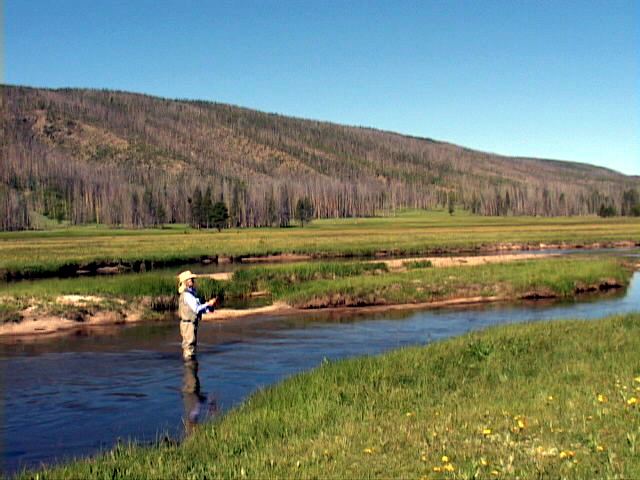
Welcome to fly fishing Yellowstone National Park. This website provides you with all the information you need for fly fishing the many trout streams in this great National Park.
A lifetime would not allow a person enough time to fish all of the water of Yellowstone National Park. It is that huge, over 2.2 Million acres. There are over 2600 miles of streams. The park offers the most water in any one area of the United States and maybe the world, that is open to the public to fly fish. The fly-fishing opportunities are diverse and unlimited.
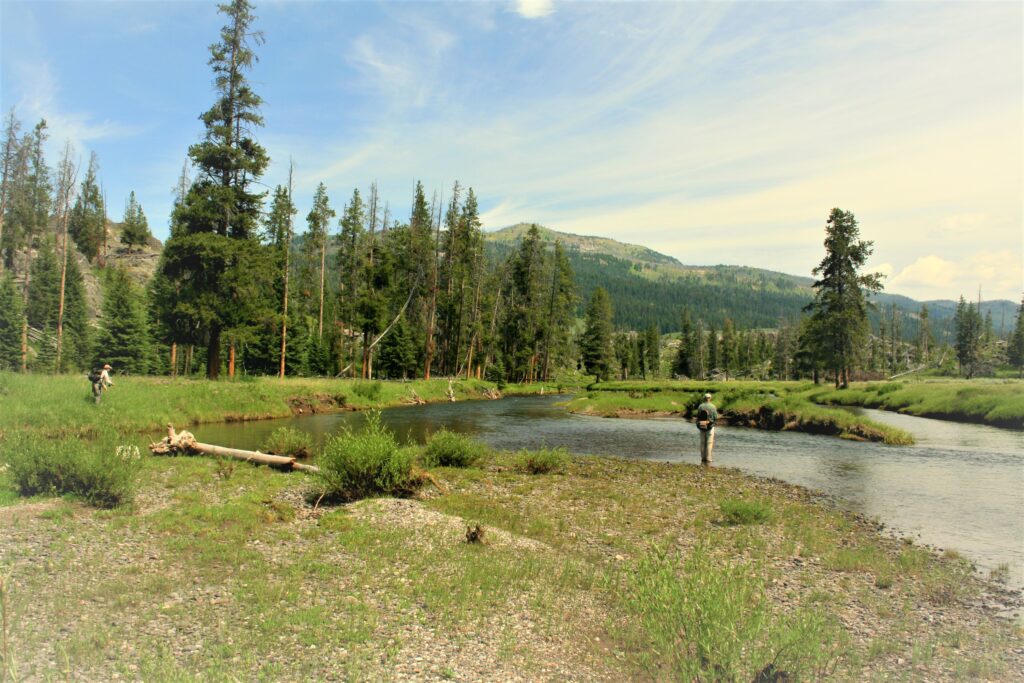
You can drive in any of the entrances, at Gardiner, West Yellowstone, Cooke City, the East Entrance or the South Entrance and any of the other smaller entrances to the park, pull off the side of the road, walk a few yards and start catching trout on the fly. Or, you can hike into (or go by horseback if it is permitted) to some sections of streams inside the park that are over thirty miles from the nearest vehicle access and catch trout. Between these two extremes, immediate access or remote, isolated locations, you can choose from hundreds of other locations to fish. Miles and miles of Yellowstone streams will never even be cast to by an angler. Yellowstone is that big and has that much water.
Yellowstone’s Trout:
In our opinion, the Yellowstone National Park’s main fly fishing attraction is its native Yellowstone Cutthroat Trout. This is the only native species of trout in the park. Wild, stream-bred rainbow, brown and brook trout also thrive in the park’s numerous streams. The typical trout in Yellowstone headwater streams are comparatively small. Some may think that the small size is a product of the park but if they have taken the time to fish other freestone streams in the Western United States where there isn’t any stocked trout, only wild or native fish, then they found that small trout are typical of any headwater mountain stream. One reason is the PH of the water.
The Best Time To Fish Yellowstone:
The fishing season at Yellowstone National Park runs from the last Saturday of May through and including the first Sunday of November. There are specific area exceptions. There isn’t a “best time” to fish during this season. Trout can be taken throughout the season.
To often, fly-fishing in the park (and everywhere else for that matter) is characterized as poor, good or excellent when it should be characterized as difficult, average or easy.
The Best Places To Catch Trout In Yellowstone:
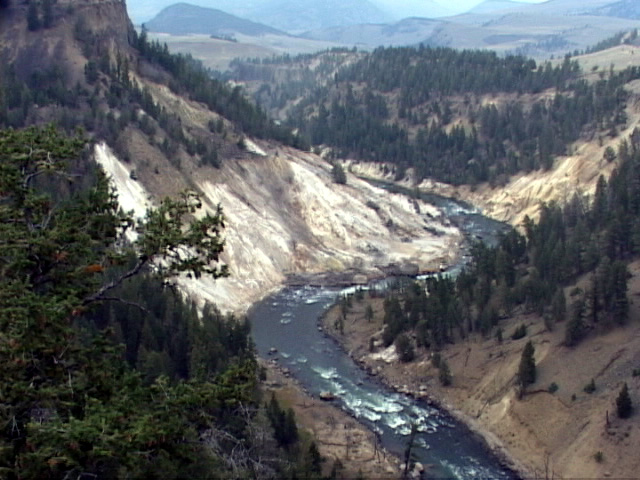
Yellowstone fly-fishing is fly-fishing at its best. Our stream directory shows not just the large number of different rivers and streams but that they are all unique small, medium and large stream native and wild trout fisheries.
Probably the first question a visiting angler asks when they arrive at the Yellowstone is “where do I fish”? Any angler could spill off a list of streams but the list would vary from angler to another. Consider this fact one more time. The Yellowstone National Park is over 2.2 million acres. There are over two thousand six hundred miles of streams that supports trout. There are about a thousand streams.
You also must consider that stream conditions are subject to change with time. Streams that have a high population of trout one year may not the next. Mother nature can drastically change the trout’s environment and can do so very quickly. A drought condition, lack of snowfall or a flood can change the trout population of a stream in a very short time. Also consider that when the trout population in a given stream becomes low, the average size of the fish in the stream usually increases.
How To Catch Yellowstone Trout:
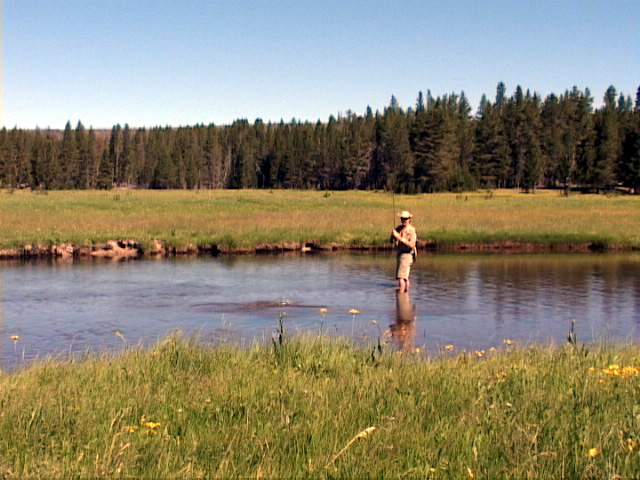
Dry fly fishing is at its best at Yellowstone. It’s much more rewarding and certainly requires more skill to catch a rising trout feeding on emerging aquatic insects than it does to try to fool a fish you cannot see beneath the surface. We use the nymphing method of fly-fishing, but not when the fish are rising to emerging insects or terrestrial insects that have fallen in the water.
Understanding the insects that the trout rely on for food is the key to this kind of quality fly-fishing. That’s where the information and instructions provided in our forthcoming fly-fishing video – “Fly Fishing Yellowstone National Park” is invaluable. The video provides specific information on all the major streams, fishing methods, strategies and techniques.
Added Attractions:
Yellowstone is a premier viewing area for bears as well as many other species of wildlife.
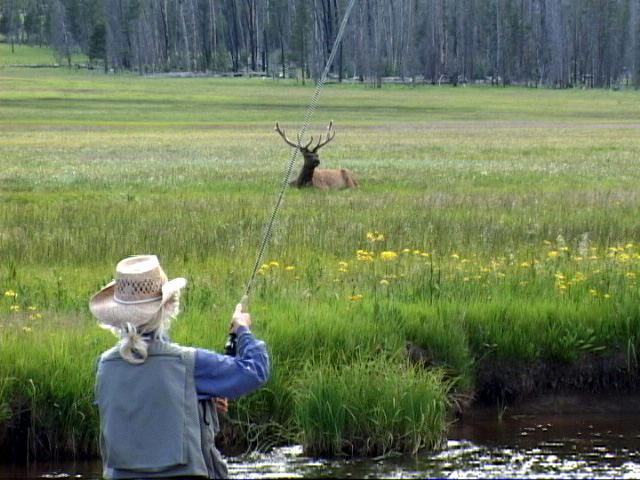
During your fly-fishing trip it is possible to see bear, deer, elk, fox, hawks, eagles, wolves, and all types of small animals.
Fly Fishing Yellowstone National
Park:
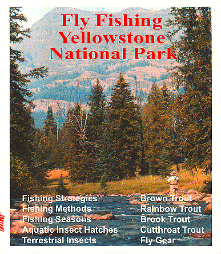
This new DVD (2 Disc Set) provides over 4 hours of information and instructions on fishing for trout in the park. $49.95
Click here for More Information
Options For Selecting Flies:
- Email us at sales@perfectflystore.com with the dates you will be fishing Yellowstone Country and we will send you a list of our fly suggestions. Please allow up to 24 hours for a response.
- Call us at 800-594-4726 and we will help you decide which flies you need.
- Call or email us with a budget for flies and we will select them and get them to you in time for your trip.
Shipping is free in the U. S. for all orders. Orders over $100 are shipped Priority Mail.

Yellowstone National Park “Perfect Fly” Selections
Best Yellowstone National Park Fly Selection:
Includes 108 flies that imitate the vast majority of the most important foods trout eat in Yellowstone streams. Save $25.10 over the regular price.
Click Here For Detailed Information
Good Yellowstone National Park Fly Selection:
Includes 82 flies that imitate the most of the important trout foods trout eat in Yellowstone streams. Save $14.60 over the regular price.
Click Here For Detailed Information
Free Perfect Fly “Fly Fishing Journal”
Please send us an email at: sales@perfectflystore.com to receive a subscription to the Perfect Fly “Fishing Journal”. It includes feature articles on blue-ribbon destinations, fly fishing techniques, and many other types of articles of interest to any fly angler. You can opt out at any time. If you decide you don’t want to receive our information, just change your status by emailing us again.
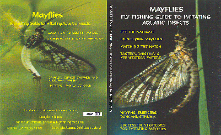
Imitating Aquatic Insects, lets you
see the naturals, learn to identify
mayflies, and match the hatch. It
includes Eastern, Mid-western and
Western Mayflies, including the
nymphs, emergers, duns and
spinners. Learn the successful
strategies for imitating mayfles.
2 DVD Disc: $29.95
Click here for More Information
Please visit our sister sites:
The Perfect Fly Store – www.perfectflystore.com
Fly Fishing the Great Smoky Mountains – www.flyfishingsmokymountains.com
