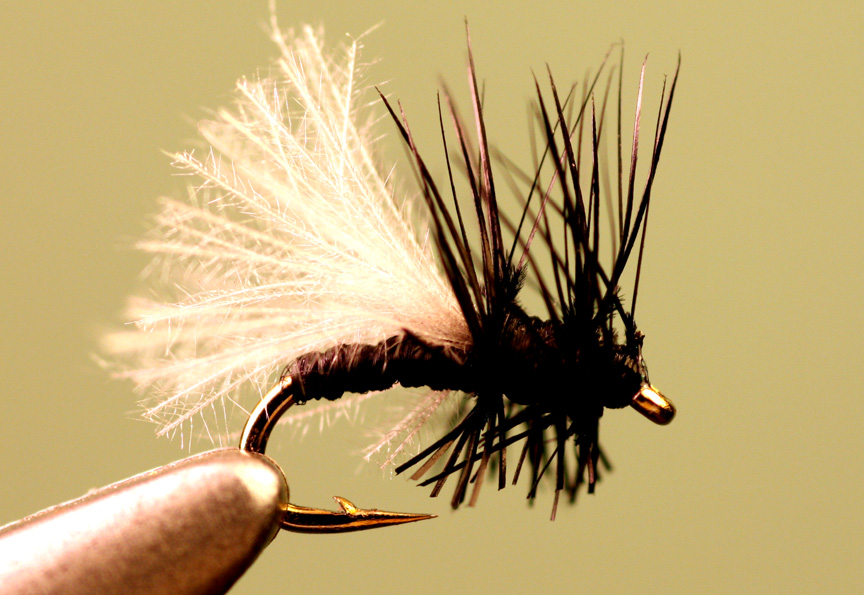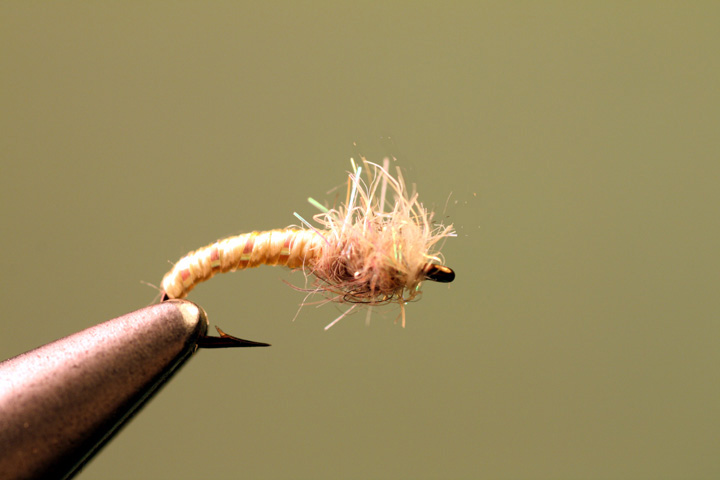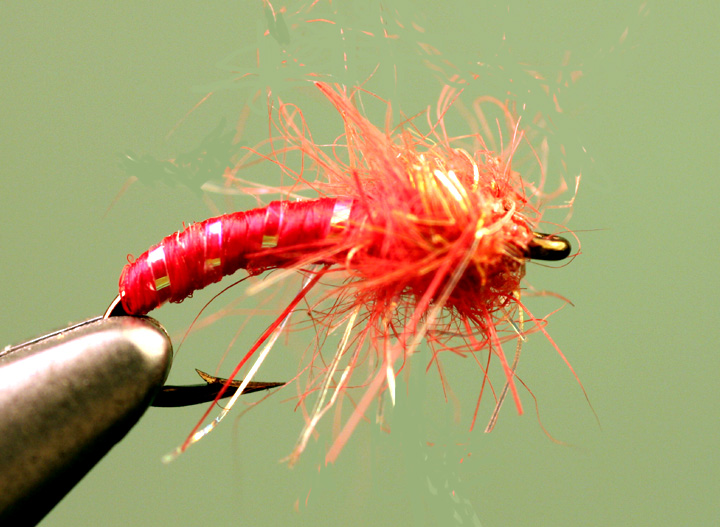
This fly imitate the midges that
are often called Blood Worms.
They are common where there’s
a soft bottom for the larvae to
build their burriwers
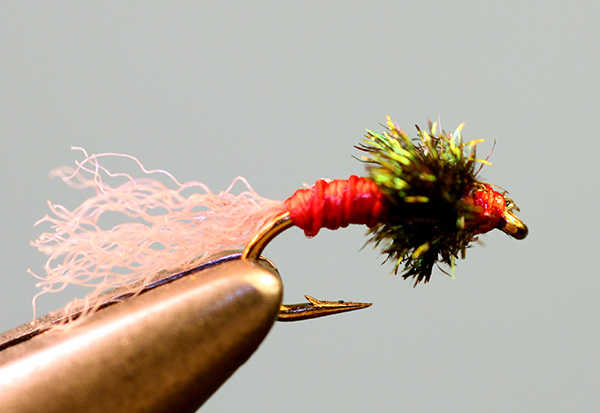
This fly imitate the Blood Worm
midges in their pupa stage of
life. This is the most important
stage of life to imitate during a
hatch.
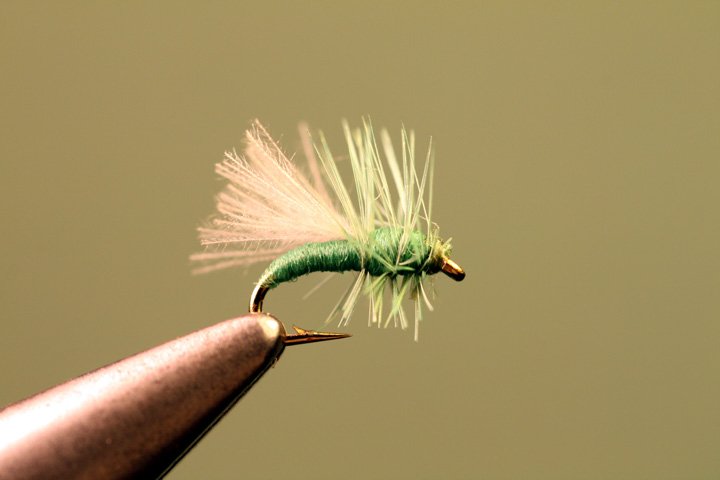
This fly imitate the many midges
that are shades of green. Red,
cream and green colors
Midges are probably the most overlooked aquatic insect that trout feed on in Yellowstone National Park. One reason is that most anglers hate fooling with the tiny imitations. They are forced to do it in many of the nearby tailwaters, but some anglers, refuse to fish them anywhere. There are some tricks to fishing the tiny little flies both from tying them on the tippet to presenting them to the trout.
Click Here for Midge Imitations (Flies)
Most anglers dislike midge imitations simply because they are small. Almost invisible flies, ultra-light tippets and fish you can’t see drive anglers crazy. Because they can’t see them well, they tend to think the trout can’t either. When they do fish them, they also think the particular fly pattern is not important.
Compared to many types of streams such as tailwaters and spring creeks, midges are not as plentiful in the park’s freestone streams. Chironomidae midge larvae stay down in their burrows in soft soil and much of the substrate of the streams in Yellowstone. That said, there is still a tremendous amount of midges in the streams. They are mostly in the tailouts of pools and back eddies as well as the meadow streams.
Midges come in as many sizes and colors as any other aquatic insect. The best way to determine what color and sizes the midge larvae, pupae and adults are is to catch and observe them. You need to be prepared with several colors and sizes of them. The most important stage of the midge is the pupa. For most of their life the larvae stay hidden down in their burrows. When they change to the pupa stage of life, they are completely helpless and can easily be eaten by trout. Usually, the trout will just remain in one place and eat all they want to eat while the helpless midge pupae are trying to get to the surface to hatch. It is rare they will eat the full grown adults from the surface because there is no reason to do so.
Occasionally, during huge hatches, clusters of midges will congregate and the trout will eat them several at a time. That’is what the Griffith Knat was designed for. It may occur in the park but we have not seen it. For that reason, I suggest you only use a midge larva or pupa, or a single adult imitation. You may prefer to drop the pupa or larva down from the dry fly adult imitation Some angler may prefer to use a strike indicator.
Click Here for Midge Imitations (Flies)
Copyright 2012 James Marsh